The Work · I
Performance Culture
A body of work that transports you into the World of Performance — actionable access to creating an environment for breakthrough performance.
¶How this came to be
TL;DR
- When Ali and Garrett first met, they did not get along.
- They fought often, never apologized and rarely created together.
- This mediocre state was tolerable until it wasn’t. Nature forced a change.
- Ali and Garrett responded by creating a state shift.
- We asked ourselves: What would our world look like if we were a powerful duo instead of divisive and adversarial?
- We began creating a new relationship for ourselves, in tandem to working on the business.
- We documented our experiences, we tried on lots of things, owning up when necessary and ultimately solidified our shared commitment to Mastery.
- At some point, our old selves were unrecognizable to our new selves and the business results were demonstrated evidence that a shift had occurred.
- We began sharing and writing more about our experience so that we could continue to grow ourselves and be a resource to others with similar struggles and ambitions.
Origin story
I’d like to briefly tell you our story of how Performance Culture came to be and why we believe this work may be the most valuable thing we ever create. Performance Culture has the potential to pave the way for an alternative way of working, collaborating, building and, we have a strong suspicion that it will make your life extraordinary in unexpected ways. That is what it did for us as individuals and as partners in business, which is why we are so eager to share it with you.
From the beginning, it was evident that Ali and Garrett were a strong match. Ali, an engineer and serial entrepreneur, has founded companies across diverse sectors, ranging from hardware and software to social networks and deep tech AI. Garrett brings startup operational experience, having helped teams grow from fewer than 50 to over 100 members. His expertise in product and design allowed him to lead product teams through all stages of development in fin-tech, med-tech, and civic-tech. What should have been a perfect partnership, wasn’t at first.
Ali was navigating the typical chaos that comes with the early stages of a business, but this was compounded by internal drama, deep information silos, and a hard to shake excuse culture. Clear fiefdoms had formed, leading to stagnation, while burn rates increased and revenue struggled. Ali recognized the signs of an impending self-implosion that could threaten the company's survival.
Garrett was confronting the company's identity crisis. While there was visible traction, no one at the company could agree on the actual value the company provided to its customers or how to consistently measure and deliver that value. There was concern that the early success was not scalable. The company was without a clear vision or purpose, and Garrett felt that this was a sign of being unfocused. He feared that the team would eventually leave the business, because it's impossible to reach a destination without agreeing where you are headed.
This mis-prioritization would only last so long. As the company grew, it began to struggle in every imaginable way. As small leaks turned into gushing floods, the brittleness of our relationship was tested. The totality of this dysfunction drove everybody, us included, to be suspicious of one another. Ali felt Garrett to be part of his problem and Garrett felt Ali to be part of his problem. For both of them it became apparent that something had to be done.
In many contentious conversations, it was clear that there were two strong headed people that seemed incompatible. In one of those conversations an agreement was made, they would figure it out or one of the two had to leave the company.
This commitment was an opportunity for a reset that we now refer to as our state shift. We talked about what the company could be if we were a dynamic pair instead of a divisive one. We talked about abilities that two people can access instead of one. We embraced the idea that it is not the strongest nor most intelligent that survives, but the most adaptable. We joke now that the start of our relationship felt like when your high school best friend meets your college best friend: awkward and a bit forced. We were more focused on finding common ground than embracing our differences or pushing each other towards what we truly wanted to achieve in our lives and for the business.
And, what we learned about our problems was this: they were all solvable, both of our problems were connected and you can only lead alignment if you yourself live the challenge of change. To do this, we had to commit more time and rigor around each other’s problems and while doing so reach a level of trust only forged if enough understanding is given throughout the process. We started documenting our progress and activating others with jargon that we spoke to each other in our collaborations and now, we reflect on this past and acknowledge that the people we used to be are unrecognizable to the people we are today. This change in self is something we are the most proud of.
The company began to hit revenue goals, growth goals, employee satisfaction goals. We began to dominate our market. Our teams were in unison. People fought less. People self-started. People owned. Accountability sprang up everywhere. People developed shared language. People were proud of their work.
This transformation took 12 months and was not a progressive up and to the right line chart. The many bumps along the way solidified the importance of the core principle of forging a meaningful relationship with another – mutual respect strengthened by open communication and a willingness to understand.
¶TL;DR Performance Culture
TLDR Performance Culture11.5 MB · DownloadPerformance Culture strives to create an environment for yourself and your team to experience real breakthrough performance. As we dive deeper into the world of performance, our vision is to ensure that all of us strive for an extraordinary level of performance.
As we go through these points, thoughts like “Why is Ali saying this but not doing it himself?” or “Why is Garrett not following through on this?” will come up. And you’d be right.
There will be times, maybe even often, when we fall short of what we’ve outlined here. Even if we fail at times, we are fully committed to these principles. You are always encouraged to hold us accountable — and we are counting on it.
Think of it like training for the Super Bowl. During practice there will be many moments of poor performance. But without structure, commitment, and rigor the chance of winning disappears entirely.
5 Critical Distinctions
of Performance Culture
- 01
Qualification is the enemy of performance.
- Whenever you find yourself qualifying a statement, redirecting attention, or formulating a reason, you are likely not taking ownership.
- While blame can be a way to defend your team’s results, in reality it takes away their opportunity for breakthrough performance.
- Blame separates responsibility from ownership.
- Ownership, on the other hand, turns context into a facility for change.
- 02
Trying something on can engage you in unexpected ways.
- See input from others as an opening, not a request for a decision.
- Try on new ideas like a jacket — you have no obligation to buy it.
- Fight the urge to react in a way that halts discussion or is conclusive.
- Clearly communicate when it’s time to make a decision.
- 03
Be precise in communication.
- Precision allows for real measurement — and what you measure grows.
- There is a difference between fact and story; interpretations often drive imprecision.
- Regularly consider precision. Actively ask for clarification when you experience imprecision.
- Effective and efficient communication is, by nature, precise.
- A request for more precise communication is an opportunity to reconsider what may be clear to you but unclear to others.
- 04
“By When” is one of the most powerful linguistic tools.
- By When is a commitment to others for resolution, completion, or even just a follow-up.
- By When is the antidote for “suffering in silence.”
- By When is a critical sign of “thriving in the open.”
- By When is a moment to highlight your intentions.
- By When creates a network of accountability that elevates and orchestrates performance.
- 05
Activating others is a required demonstration of proficiency.
- To reliably deliver high performance, Performance Culture has to show up across and beyond yourself.
- First activate those with a propensity to willingly adopt new things.
- Openness is step one; those with it are likely to experience a steady upward trajectory.
- Expect resistance — in most cases it’s a positive sign of long-term potential. A healthy dose of skepticism can breed the best advocates.
- Mental Models and Jargon are powerful tools in activating others.
¶Distinctions of Performance
Introducing Performance Culture
State Shift refers to a moment or a series of moments that are self induced interruptions of how you currently operate. Interruptions can be orderly, they can also be disorderly. The listed distinctions are meant to serve as both the catalyst and the guide for a constructive landing.
Mastery creates an application layer to the topic we explored earlier. It focused on three distinctions that are tangible manifestations of mastery in the workplace. We have found Part 2 to be some of the most practical and useful distinctions for growing companies and communities that are beginning to rally around task completion instead of outcome ownership.
Activation focuses on the process of enrolling and engaging with others in Performance culture. Part 3 is arguably the most self-fulfilling and critical set of distinctions in that culture only exists if others are active participants in it. Most importantly, the act of activation will alter your take on Performance Culture for yourself and your organization. Without engaging others, there is no hope that you will be able to contribute to this body of work in a meaningful way.
¶STATE SHIFT
¶You are operating a fraction of your true capabilities.
Principle
- Try on new ideas on like a jacket — you have no obligation to buy it.
- See input from others as an opening not a request for a decision.
- Fight the urge to react in a way that halts discussion or is conclusive.
- Clearly communicate when its time to make a decision.
Jargon
I am going to put my brain on loud speaker…
Try on this idea…
What is holding you back from…
That is the industry standard…
That is how its been done before…
¶Trying something on can engage you in unexpected ways.
Principle
- Try on new ideas on like a jacket — you have no obligation to buy it.
- See input from others as an opening not a request for a decision.
- Fight the urge to react in a way that halts discussion or is conclusive.
- Clearly communicate when its time to make a decision.
Jargon
I am going to put my brain on loud speaker…
Try on this idea…
What is holding you back from…
That is the industry standard…
That is how its been done before…
Qualification is the enemy of performance should move below (I’m doing it) and a hint of that should be a part of the state shift.
¶Embrace breakdowns as byproducts of rigor
Principle
- Breakdowns can happen between People and within Systems.
Breakdowns within Systems
These are often systemic in nature, we spoke at length about the differences between fixing the symptoms vs. the system. A system's breakdowns can usually be resolved in a mostly mechanical way. A Burndown List is generated with the required steps for resolution and the plan is then executed.
Consider that a key aspect of an outstanding leader is that they design systems that follows a “If it breaks will you notice?” principle, system’s that raise their issues before anyone else notices.
Breakdowns between People
Breakdowns with people, e.g. your peers, is an inevitable part of your experience and frankly, life in general.
Somebody promised you they would get something done before a certain date and did not. You are sharing your vision for the next steps and somebody thinks it’s a terrible idea. You promised to get something done by a certain time and did not, worse yet, you didn’t want to communicate it because you really thought you would make the deadline. Somebody has bypassed you as the team lead and is commandeering your direct report. There are really endless opportunities to “F things up” and we all do it.
What differentiates a great leader in these situations is how they deal with breakdowns. If you really think about it, breakdowns are never about you and me, as mentioned above, seeing them as not personal is a key skill to develop and practice, especially if it is in relation to Breakdowns with People.
Here’s why: Just as with our way back ancestors hearing some rustling in the bushes thinking the predator is about to pounce, we tend to see a hidden meaning and agenda in the things that happen around us.
Frank didn’t submit his work in time? He’s out to get me. Mike sent me some rude slack messages? He is forcing a reaction out of me to get his way.
While these interpretations might have reasoning to support them, they have one thing in common, they stand in the way of performance.
Focusing on the people involved in the Breakdown, their possible motivations and intentions, means going down an unproductive rabbit hole that diverts from getting to the core of what there is to do:
When faced with a breakdown
- Don’t deal with a breakdown when your blood pressure is high - get off the computer/phone/slack and take a walk
- Acknowledge the breakdown
- Give your peers the benefit of a doubt (specifically when remote)
- Focus on what you are both committed to (e.g. company success, delivering great work, …) to resolve the breakdown
- Apply 5 day alignment. Put a by when on an interpersonal breakdown.
- Put structures & systems in place that support not running into the same breakdowns.
- Breakdowns are not personal, they are just things in the way of achieving what we want.
- Breakdowns are often revealed by pushing limits and applying rigor.
- Rigor is a knob not a switch. Sometimes during moments of intensity, rigor has to be adjusted to establish a safe connection.
- Great leaders are adamant about dealing with breakdowns quickly.
Jargon
If it breaks will you notice?
How does that thinking serve me?
¶Ego kills Mastery
Principle
- Breakdowns can happen between People and within Systems.
Breakdowns within Systems
These are often systemic in nature, we spoke at length about the differences between fixing the symptoms vs. the system. A system's breakdowns can usually be resolved in a mostly mechanical way. A Burndown List is generated with the required steps for resolution and the plan is then executed.
Consider that a key aspect of an outstanding leader is that they design systems that follows a “If it breaks will you notice?” principle, system’s that raise their issues before anyone else notices.
Breakdowns between People
Breakdowns with people, e.g. your peers, is an inevitable part of your experience and frankly, life in general.
Somebody promised you they would get something done before a certain date and did not. You are sharing your vision for the next steps and somebody thinks it’s a terrible idea. You promised to get something done by a certain time and did not, worse yet, you didn’t want to communicate it because you really thought you would make the deadline. Somebody has bypassed you as the team lead and is commandeering your direct report. There are really endless opportunities to “F things up” and we all do it.
What differentiates a great leader in these situations is how they deal with breakdowns. If you really think about it, breakdowns are never about you and me, as mentioned above, seeing them as not personal is a key skill to develop and practice, especially if it is in relation to Breakdowns with People.
Here’s why: Just as with our way back ancestors hearing some rustling in the bushes thinking the predator is about to pounce, we tend to see a hidden meaning and agenda in the things that happen around us.
Frank didn’t submit his work in time? He’s out to get me. Mike sent me some rude slack messages? He is forcing a reaction out of me to get his way.
While these interpretations might have reasoning to support them, they have one thing in common, they stand in the way of performance.
Focusing on the people involved in the Breakdown, their possible motivations and intentions, means going down an unproductive rabbit hole that diverts from getting to the core of what there is to do:
When faced with a breakdown
- Don’t deal with a breakdown when your blood pressure is high - get off the computer/phone/slack and take a walk
- Acknowledge the breakdown
- Give your peers the benefit of a doubt (specifically when remote)
- Focus on what you are both committed to (e.g. company success, delivering great work, …) to resolve the breakdown
- Apply 5 day alignment. Put a by when on an interpersonal breakdown.
- Put structures & systems in place that support not running into the same breakdowns.
- Breakdowns are not personal, they are just things in the way of achieving what we want.
- Breakdowns are often revealed by pushing limits and applying rigor.
- Rigor is a knob not a switch. Sometimes during moments of intensity, rigor has to be adjusted to establish a safe connection.
- Great leaders are adamant about dealing with breakdowns quickly.
Jargon
If it breaks will you notice?
How does that thinking serve me?
¶MASTERY
¶1. Complete work
Principle
- Complete Work requires an understanding of the intended purpose for doing something — the why. Sometimes you hear “fall in love with the problem not the solution” or “measure twice, cut once”. Both of these sayings are in relation to taking the time to acknowledge the intended purpose of something before diving into the tactical what or how.
- Complete work often serves as the explanation following the phrase ‘demonstrated by,’ clearly showing that you have achieved the intended outcome.
- The completion of a task as it was intended is distinct from how it was communicated. Intention to complete work extends beyond what you contribute individually, but also how you inform and activate others
- Complete work does not mean do everything relevant to the outcome, nor does it mean doing all the work alone — this is actually counterproductive.
- Complete work reaches it highest level of performance when someone can engage with your burndown list and, without direct guidance, clearly understand the desired outcomes — what needs to be done, why it matters, how it will be accomplished and by when. This allows them to challenge the allocation allocations of of scope, time, or resources to better align with the organization’s overall goals and realities
Jargon
Own your part of the world
Communicate intention with demonstrated by
Complete Work is demonstrated by
We can do it however you want to do it
¶3. Qualification is the enemy of performance.
Principle
- A key tenet of Performance Culture is Ownership. Ownership does not mean you do all of the tasks yourself.
- Ownership is being able to leverage and empower others.
- Whenever you find yourself qualifying or justifying a statement, redirecting attention, or formulating a reason or excuse, you are likely not taking ownership.
- Blame separates responsibility from ownership.
- While blame can be a way to defend your team’s results, in reality, it takes away from them the opportunity for breakthrough performance.
- Ownership turns context into a facility for change.
Jargon
I’m just being realistic…
If I had more experience…
I don’t have the ability to…
They were supposed to handle it…
I wasn’t aware; they should have informed me…
It’s not your fault but…
¶4. What is Communication?
Principle
- Intentional Communication is the practice of speaking your intention clearly and giving others opportunities to chime in where needed. This is the opposite of operating from a position of seeking approval, which is a “lean back”, passive approach to operating, to a lean forward, active position.
- Effective Communication comes in such a way that the intended message lands with its intended recipient.
- Only once communication has been both heard and acknowledged, as intended, was the communication effective. The best way to let someone know that their communication was properly received is to “recreate” it in your own words (e.g. “So if I understood you correctly you are saying [...]”) with the sender responding with a variant of “That’s right!”.
- All the basics of Respectful Communication (“Being clear, honest, and polite, and avoiding language that is rude, aggressive, or judgmental [...]”) apply here as they do anywhere.
Jargon
You are never blocked.
So if I understood you correctly you are saying
My intention is to…
¶7. What you measure grows
Principle
- There is no growth without measurement. Build a strong productive relationship with your metrics.
- Measurement can be villainized as micromanagement, however in the world of performance, scoreboard creates an objective tool to understand growth.
- Finding the right metrics to measure performance is mostly science and sometimes an art. We use the term Demonstrated By to create a clear target that answers What would unambiguously demonstrate that you have delivered on the intended outcome
- The right metrics are often uncomfortable at the beginning as our natural instinct is to shy away from them.
- At all times, know whether you are progressing, stalling or regressing with what you are out to achieve.
Story
Story should touch on
- measuring “what’s really going”
- Here a leadership decision is needed, what are you more committed to? The “looking good” or the delivery of extraordinary performance? Understand that all leaders are clear that early metrics, more often than not, look terrible and that the key is to measure “what’s really going” on and increase performance, together.
- tooling as a force multiplier
- Proper tooling is a force multiplier. Just as levers allow us to lift weights that are otherwise impossible to lift off the ground, software (technological) tools allow us to deliver performance far beyond what would have been possible without them. As such, a major unlock is available through the mastery of the aforementioned tool. When you are concerned about performance, the choosing, setting up and using of your tools-of-the-craft will have an outsized impact on you, your teams and your peers' performance. Own your tools, master them, refine them - often you will know these better than those that built them.
Jargon
Outcome Owner
Demonstrated by
By When
Objective & Key Results
¶9. Living a life of 10x-ing my output? (was 10x Results)
Principle
- As leaders our job is to manage work and get it to completion, establishing a well run machinery that delivers consistent, predictable and appropriate results. As Leaders we are asked to go beyond that, while the above is critically important we expect our Leaders to reliably carve out time for, what we call, 10x Projects.
- These projects are self-discovered and self-ushered to completion and are taken on by our Leaders to deliver outsized wins for the organization. While there are no recipes for these projects, 10x Projects have a clear reason for why they are 10x.
- 10x Projects have outcomes that are inarguably 10x.
- Consider that outsized wins come from outsized commitments (e.g. big goals) and outsized efforts to make those goals a reality.
¶ACTIVATION
¶“By When” is one of the most powerful linguistic tools.
Principle
- By When is one of the most powerful linguistic tools that creates a reliable foundation for performance
- By When is a commitment to others for resolution, completion or even just a followup
- By When creates a network of accountability that elevates and orchestrates performance. A highly effective organization (e.g. high performance) is held together by a highly reliable network of By When’s.
- By When is the antidote for “suffering in silence”. By When is a critical sign of “thriving in the open”
- Once a By When has been delivered the recipient can use it as a reliable building block to build on top of or use the By When as the moment to follow up. A committed communication with a By When helps keep what needs to get done in reality
- Missing a By When is not in and of itself an issue, but failing to communicate an updated, revised or revoked By When will reliably reduce the organizational performance.
Jargon
Can you share with me your by when on this…
By October 5th I will do xy&z or provide an update on the status of xy&z
A communication without a By When is just Chatter: “I will get back to you asap!”
A communication with a clear By When will open the door to a different level of Performance: “I will get back to you by 5pm tomorrow!”
¶Activating others is a demonstration of proficiency
Principle
- Nothing happens without alignment, nothing happens without enrollment. It is your job to get alignment from your peers, leaders and those that report to you. Any change, adjustment, new invention or product - they all require enrollment, from those around you and from your clients.
- Communicating in such a way that they discover (for themselves) that what you are proposing will benefit them or will support them or their organizations to fulfill their own intentions is a key component of an enrollment conversation.
- Another key component is acknowledging and dealing with consideration, concerns and disagreements. An aligned commitment is not necessarily a compromise.
- Using “Force” is always an available tool in a Leaders tool box. Using “Force” often however is an indicator of underdeveloped Leadership skills.
- Understand that friction and viscosity are fundamental truths and describe the difficulty of movement. Friction is a force that opposes the movement of objects that are in contact with each other, and viscosity measures how hard it is for one fluid to slide over another. Higher viscosity leads to higher resistance. These concepts teach us a lot about how our environment can impede our movement.
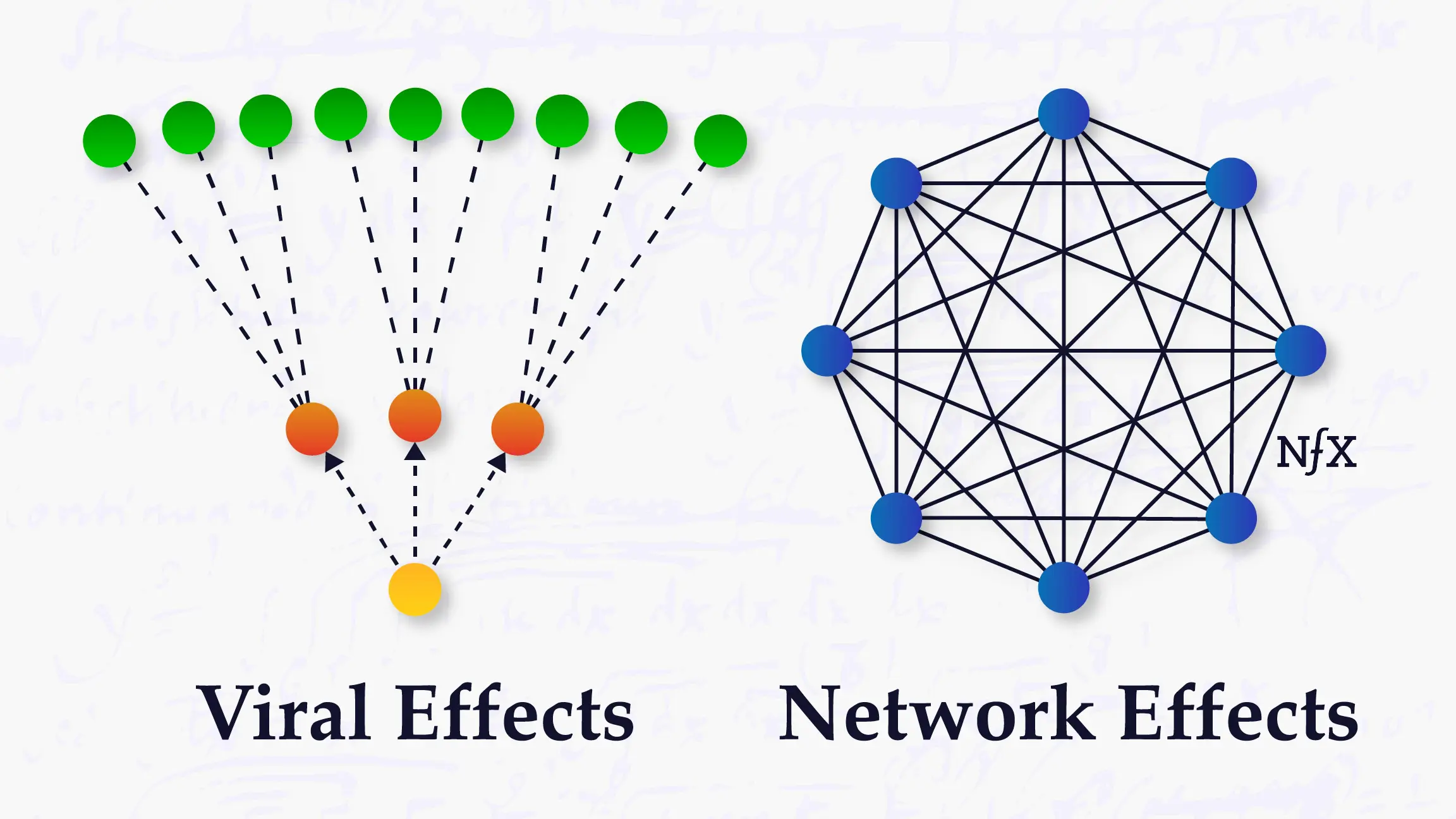
It’s a network, networked thinking…
¶Commitment to Mastery
Commitment to Mastery
- Achieving mastery is a real lift that we are committed to guiding you through. Are you committed to the lift?
- Mastery manifests itself in lessons, mindsets, and battle tested shareable stories. But eventually, Mastery becomes just the natural expression of you.
- Mastery starts with choosing to experience a state shift followed by discipline thereafter. Resistance, friction and inertia are fundamental elements that can build or block mastery.
- Mastery is driven by rigor which is a knob not a switch. Rigor will not define where you go but rather how quickly you get there.
- Because Mastery is a context, it is critical to reliably activate others.
- Mastery feels like aliveness signaled by lightness, playfulness and natural flow.
The pleasure of finding things out
Mastery is the core principle that drives everything we do. Embracing mastery as a life goal profoundly influences how we view time spent and the depth of knowledge gained. It all starts with the simple pleasure of finding things out. As others apply and adapt this guide for themselves and their organization, we expect the mastery mindset to make Performance Culture an increasingly confident, precise, insightful and intuitive body of work.
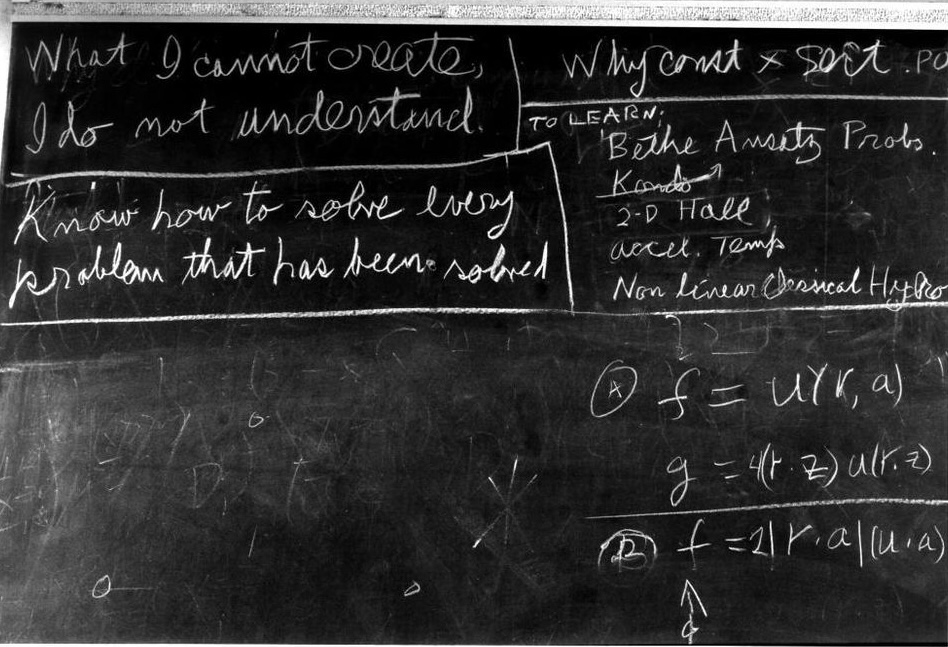
The Mastery Arc
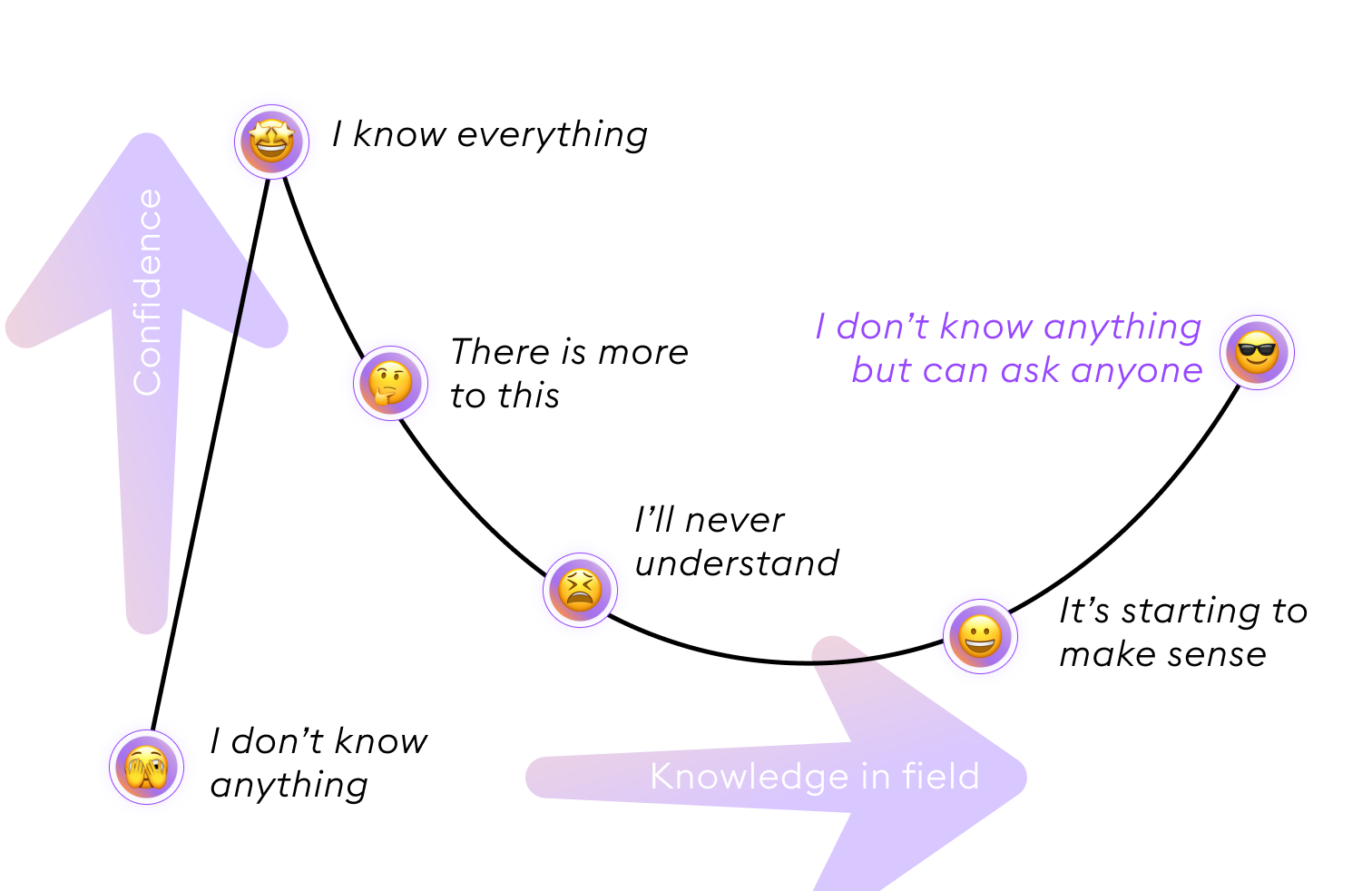
Mastery is about embracing a journey of continuous growth, not reaching a destination. Here’s a personal example of my evolving process of learning and the pursuit of mastery:
My father grew up in a family with limited means. However, during his time at Cornell in the late ’70s, he was able to experience the joys of hospitality. One area that particularly captured his interest was the world of wine. As he raised my sister and I, he always encouraged us to explore and appreciate the complexity of wines — not as a pursuit of exclusivity, but as a subject to converse with creatives and farmers alike.
In my own journey towards mastering the subject of wine, I’ve gone through various stages of learning. Initially, I knew little beyond what my father had shared with me. I vividly remember the first thing I taught him: the story of the 1985 Austrian diethylene glycol wine scandal. At that early stage, I felt as though I knew a great deal, even though in reality, I knew very little. However, it was this basis of enthusiasm and curiosity that opened doors for me to engage with more knowledgeable others. These interactions challenged me, helped me embrace a more humble perspective, and opened me up to unexpected things.
Years into my mastery journey, I met a wine industry professional named Jules and I was struck by how different her approach to learning about wine was from mine. I had always taken a structured academic approach to the topic, her understanding was shaped by storytelling specifically how current experiences related to past ones. She had a depth of insight into the world of wine that transcended the technical knowledge I had acquired. This revelation opened my eyes to a dimension of mastery that I was missing and am still exploring today. Jules and I eventually got married; we still say
To fall in love drink this
I had another realization about mastery at a dinner party where I brought a simple bottle of wine as a gift for the host — nothing special, just something I already had at home. As the evening went on, other guests, knowing my passion for wine, began comparing their wine gifts to mine. They even asked me to rate their choices, often downplaying their own while over praising mine. It became clear that they were more interested in seeking approval than engaging in a conversation about knowledge or impressions. This made me rethink what mastery truly means. At some point, being seen as an expert can create a barrier between you and others. Yet, my journey into wine had and continues to be about creating connections, not fostering separation. This experience taught me that mastery is not solely about knowledge; it’s about building relationships and inspiring others. As Antoine de Saint-Exupery wisely put it
If you want to build a ship, don’t drum up people to gather wood, divide the work, and give orders. Instead, teach them to yearn for the vast and endless sea.
I am not entirely clear where I am in the mastery arc when it comes to wine, but I do know that I know more than when I started and still less than I would like. The more I learn the more doors I see that I have yet to walk through and that future of options excites me.
I have no question where my friend Nick stands in his mastery journey. Nick is the head sommelier at Eleven Madison Park and was recently awarded a designation naming him one of the wine experts of the world. This is not what marks his degree of mastery. I recently had Nick over for dinner and towards the end of the night we challenged him to do a blind tasting along with our other friend Rashad. We picked something impossible to guess and I think they knew it. Yet, they were still able to thoroughly enjoy the process of applying their knowledge, being right for a moment, but ultimately being wrong. I witnessed the joy of taking aim, doing so at moments alone and then engaging with others. Mastery is less about knowing and more about enjoying.
¶The Power of Jargon
The Power of Jargon
- Language and rituals are the foundation of culture. Jargon establishes culture.
- Jargon/Memes/Lingo are critical tools to adopt, internalize and consistently apply ideas.
- Lingo permeates entire network as information is understood and applied.
- The speed in which jargon is adopted and used is an indicator of a successful state shift.
- Eventually, you will coin your own jargon and it will take on a life of it’s own.
- Jargon is no fun when spoken alone.
Jargon is the foundation of culture
A continued and reliable delivery of high performance requires the creation of a network of peers that have agreed upon a set of critical “Rules of the Game”. Said in another way, in this network people agree on a set of distinctions and speak the same Jargon.
Nearly every area of human activity, from sports to medicine, has its own specialized vocabulary, its own “little language”. These words and phrases are the jargon of the activity…Remember that most education is based on the premise that speaking the language is more important than having something to say. Learning the vocabulary of a hobby is part of the fun. As a practical matter, jargon serves two rather wonderful purposes. First, its shorthand for the people who understand it….Unless of course, you don’t understand the vocabulary. Which bring up the other wonderful thing about jargon: It can be used to confuse and exclude people who are not members of the club. I call this the Pig Latin Principle. Remember the gleeful feeling you got as a child, talking to your buddies in gibberish…Well, thats the same feeling lawyers get when they say “caveat emptor” or “corpus delicti”, or “ipso facto”. You’ll notice however, that when they truly wish to communicate they talk like this: You owe me $800 pay now”.

Jargon as described in the funny book There Are No Electrons: Electronics for Earthlings
A series of foundational distinctions critically help you and your team to speak about, deliver and ask for what’s required for high performance. To be able to reliably deliver high performance we have identified a series of distinctions that have emerged over the years as the key ingredients. You will hear about them often in your conversations with your peers, keep an eye out for them and see if you can Discover For Yourself how they allow you to unlock productivity at a different level.